
About:
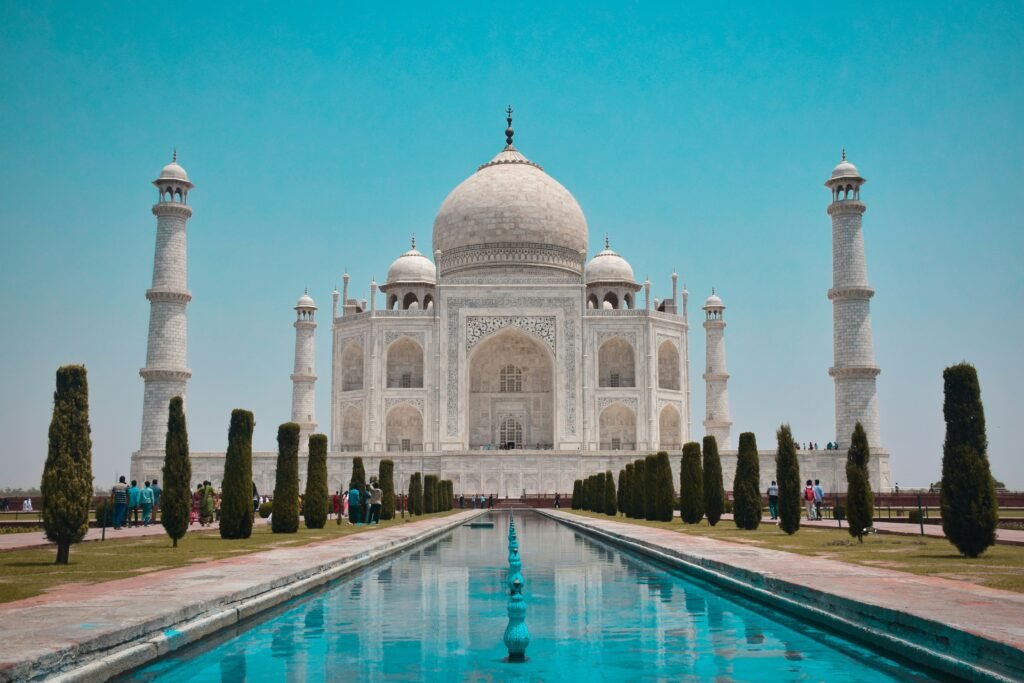
The Taj Mahal is an ivory-white marble mausoleum on the right bank of the river Yamuna in Agra, Uttar Pradesh, India. It was commissioned in 1631 by the fifth Mughal emperor, Shah Jahan, to house the tomb of his beloved wife, Mumtaz Mahal; it also houses the tomb of Shah Jahan himself
history:
The Tai Mahal, the grandest mausoleum the world has ever seen, was commissioned by Shah Jahan, the Mughal Emperor, for his favorite wife Mumtaz Mahal. The constructjon of the mausoleum commenced in 1632, around a year after Mumtaz died, on the banks of the Yamuna River. Though the main mausoleum was constructed by 1643, it wasn’t until 1653 that the whole complex was completed. Unfortunately, the emperor overthrown from power and imprisoned by his son Aurangzeb in 1658. Shah Jahan spent his last days in imprisonment in the nearby Agra Fort from where he looked at his marvellous creation. When he died in 1666, he was buried inside the Taj Mahal, beside his loved wife.
garden:
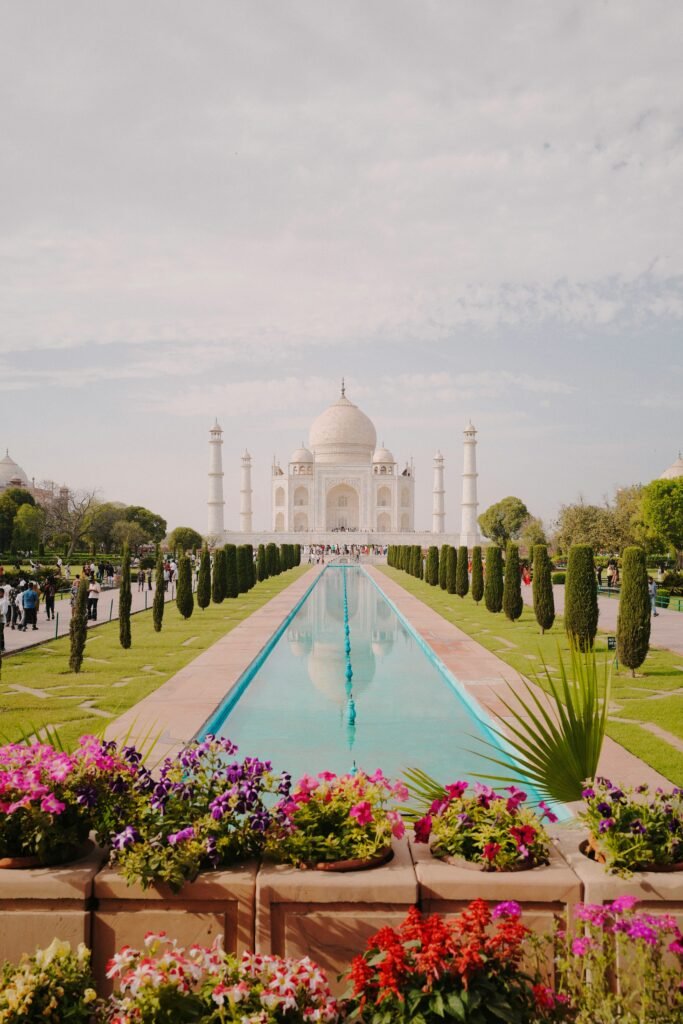
The Taj Mahal Garden, known as the Charbagh, is a formal 300-meter square complex designed to represent the Islamic vision of paradise as described in the Quran. Following a traditional Persian layout, it is divided into four main quadrants by two intersecting water canals that meet at a central raised marble pool.
- Symbolism of Paradise: The “four gardens” (Charbagh) layout reflects the four rivers of paradise: water, milk, wine, and honey.
- Reflecting Pool: A central raised marble tank, called al Hawd al- Kawthar, reflects the main mausoleum in its waters.
- Symmetry and Geometry: Each quadrant is further subdivided into 16 flowerbeds by stone-paved walkways, maintaining strict geometric order.
- Symbolic Plantings: Traditionally, cypress trees (signifying death) and fruit-bearing trees (signifying life) were planted in symmetrical
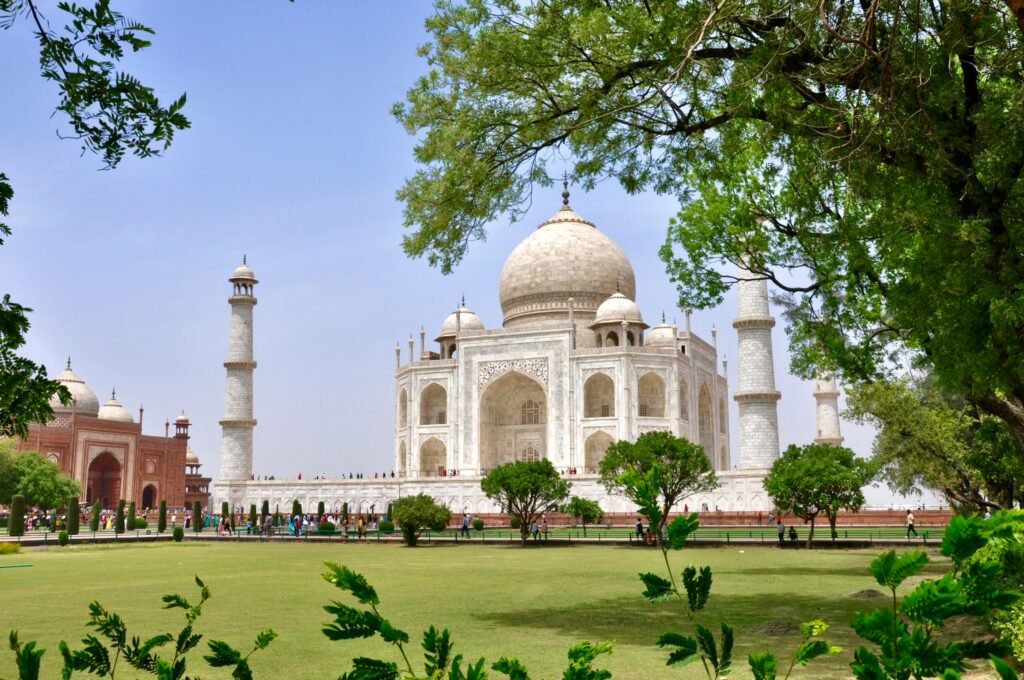
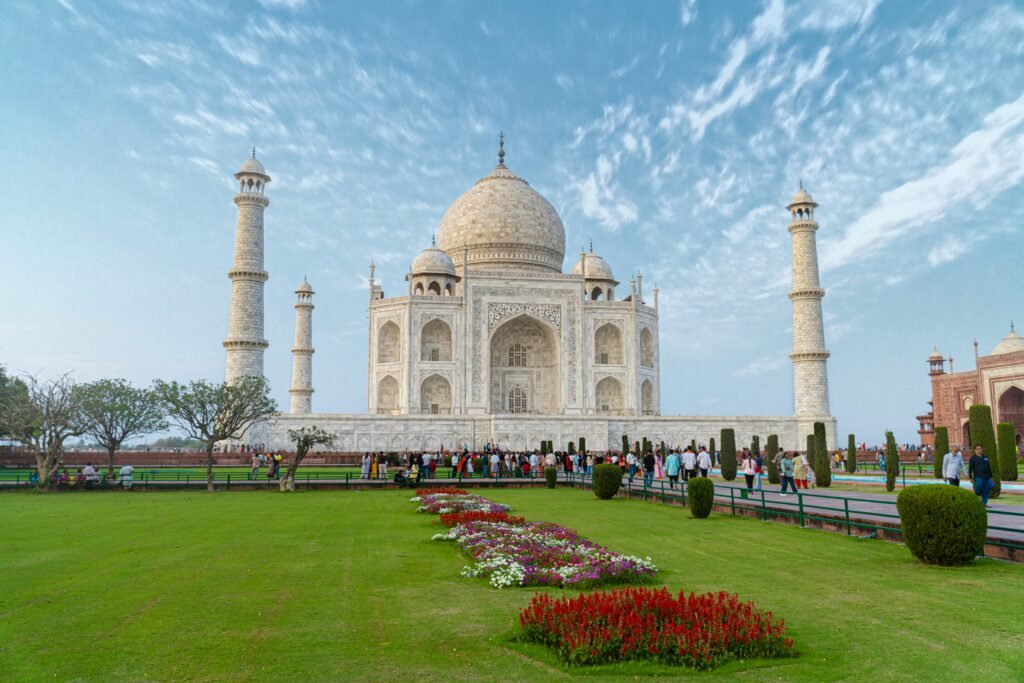
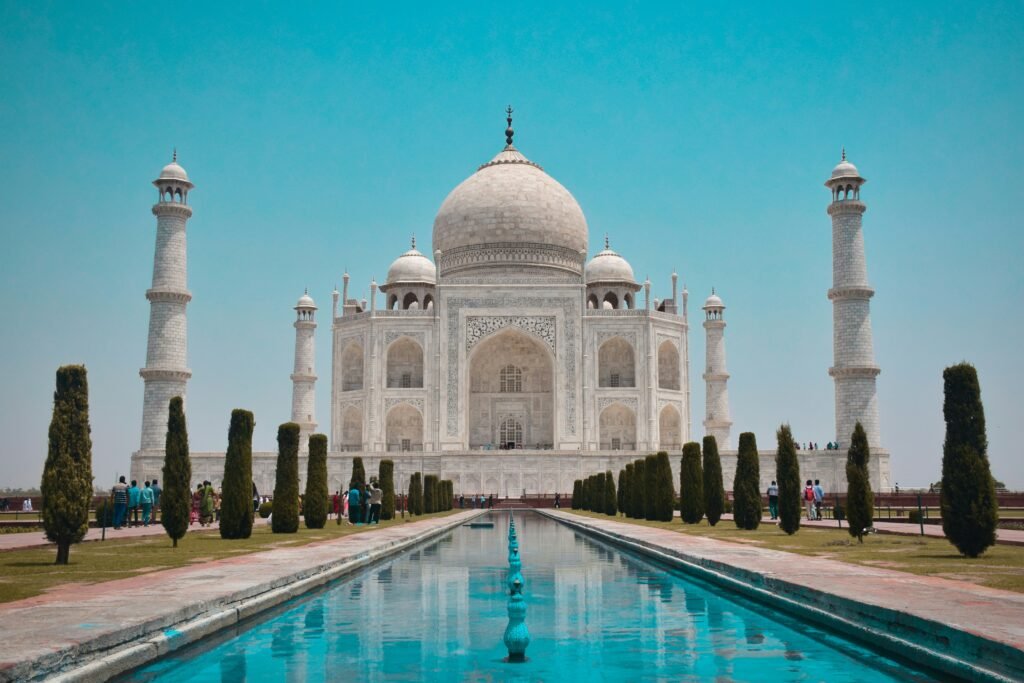
The Taj is surrounded by a sprawling 980 sq. ft. Mughal garden or Charbagh. Raised pathways divide the garden into 16 sunken flowerbeds. An elevated marble water tank placed between the main gate and the tomb adds to the beauty of the whole place. The Taj Gardens were originally modeled on the famous Persian gardens. However, when the colonial rulers took possession of the Taj, they changed the garden’s landscape and made it look like the lawns in London.
architecture:
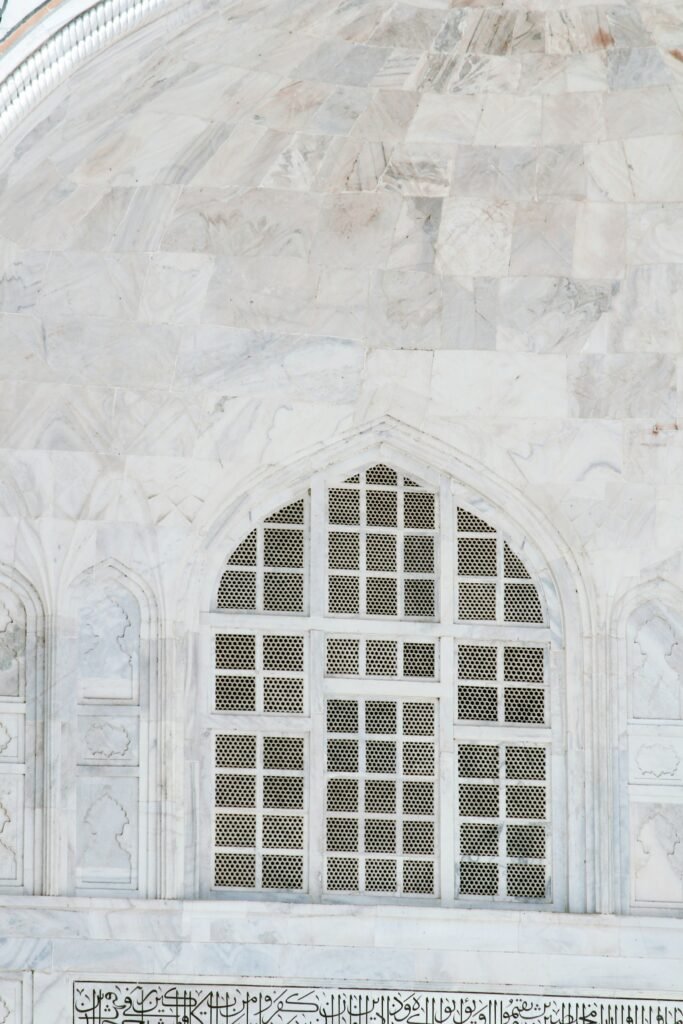
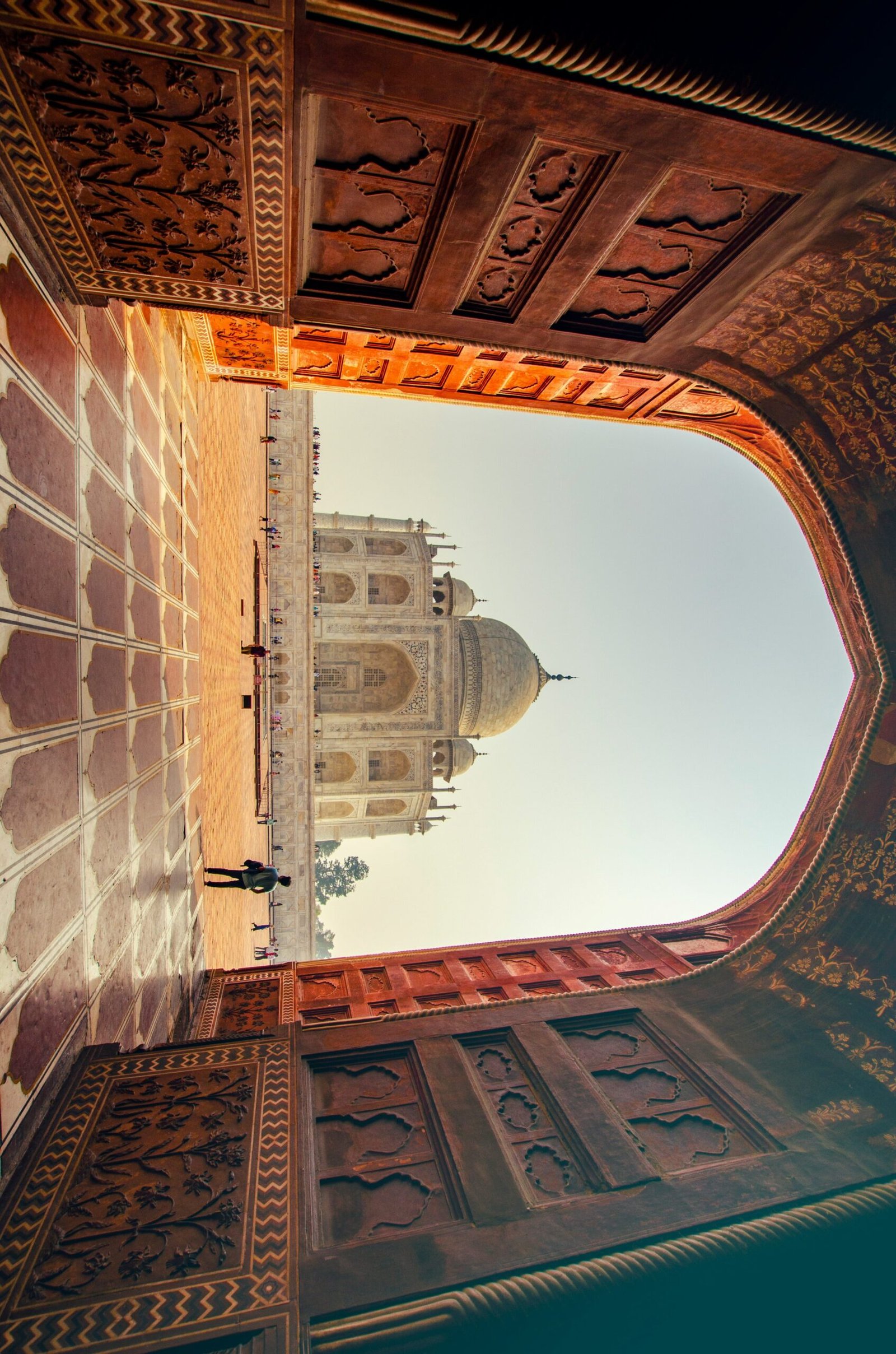
A universally admired masterpiece of art, the Taj Mahal combines elements from Islamic, Persian, and Indian architectural styles. The monument covers an area of 42 acres, bounded by crenelated walls on three sides and the Yamuna on the fourth side. It was constructed using white Makrana marble sourced from Rajasthan. Thousands of precious and semi-precious gemstones were also used to enhance the beauty of the memorial.
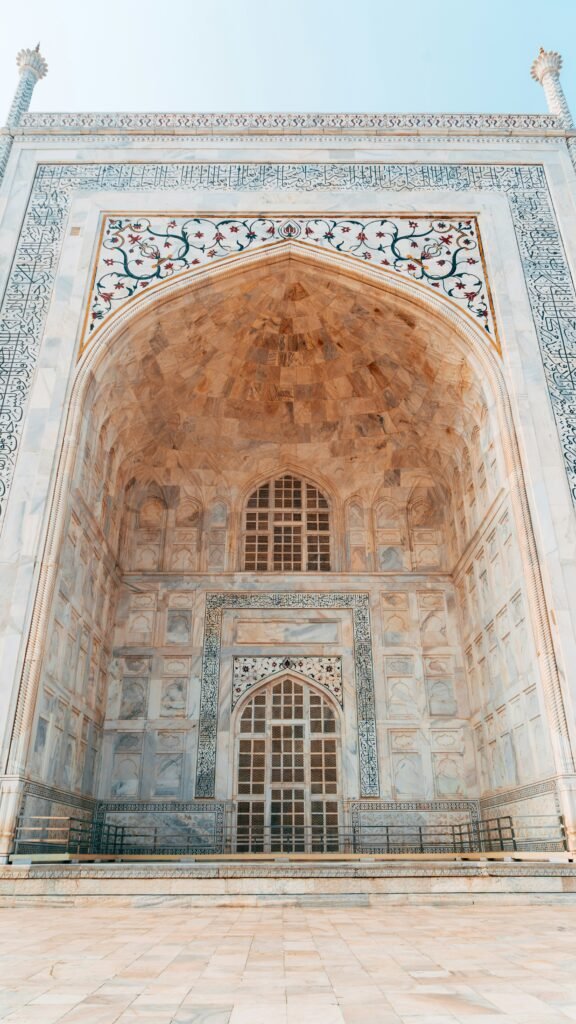
The Taj Mahal stands on an elevated square plinth that has four minarets standing at the four corners. The symmetrical building housing the crypts has an arch-shaped entryway that sits below a colossal dome and finial. Inside the main hall of the mausoleum, you can see the false sarcophagi of Shah Jahan and Mumtaz Mahal. The actual tombs are located inside a locked chamber at a lower level.
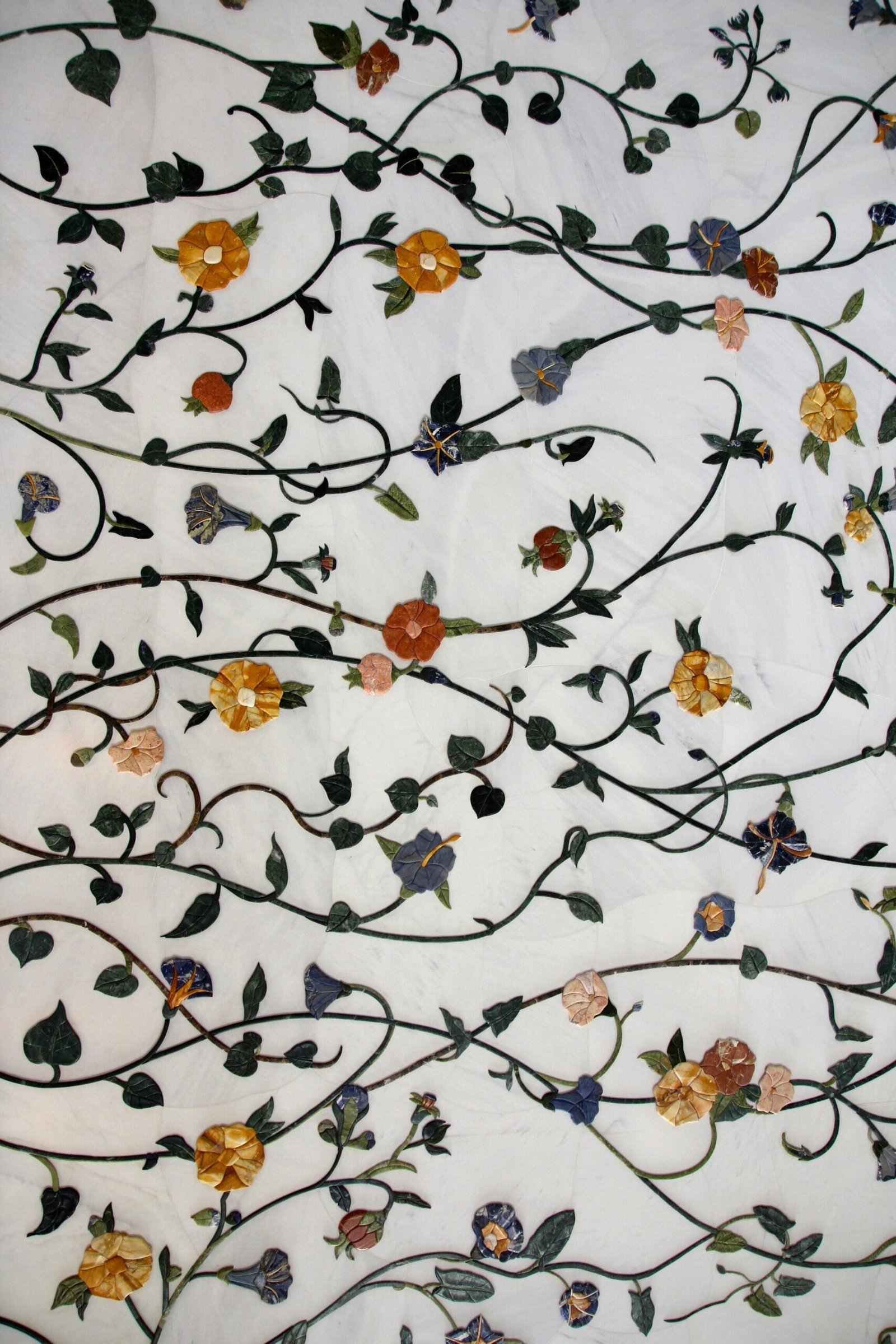
While the external decorations of the monument testify to the Mughal craftsmanship, the interiors are equally dazzling. The octagon-shaped inner chamber features jali bordering and quotations from the Quran on the cenotaphs and intricate decorative details featuring twining vines, flowers, and fruits, highlighted with 28 kinds of precious and semiprecious stones. Though the base and casket are delicately decorated, the crypts where the main bodies are kept are rather plain, in keeping with the Islamic tradition.
It took more than 22000 skilled artisans, laborers, painters, stonecutters, and a huge amount of 32 million rupees to build the Taj Mahal. Apart from the mausoleum, the Taj complex houses a mosque, a museum, a guest house, and ornamental gardens.
Attractions near Taj Mahal:
- Agra Fort (3.1 km)
- Jehangir’s Palace (3.1 km)
- Jama Masjid (4.1 km)
- Mankameshwar Temple (4.5 km)
- Tomb of Itmad-Ud-Daulah (6.7 km)
- Chini-ka-Rauza (7.2 km)
- Mehtab Bagh (7.8 km)
Things to See in the Taj Mahal Complex:
Taj Mahal complex comprises of several beautiful structures and attractions, including:
- A red sandstone mosque situated on the west of the mausoleum
- Mehmaan Khana or assembly hall located on the east of the mausoleum, identical to the mosque
- Jilaukhana or forecourt zone
- Bazaar streets or two identical streets that start from the east and west gates and lead up to the
- Jilaukhana
- The Great Gate, Gate of the Mausoleum or Darwaza-i-Rauza
- East Gate (Fatehabadi Darwaza), West Gate (Fatehpuri Darwaza), and South Gate (Sidhi Darwaza) The Taj Museum